
High Extraction Naturally Leavened Sandwich Bread
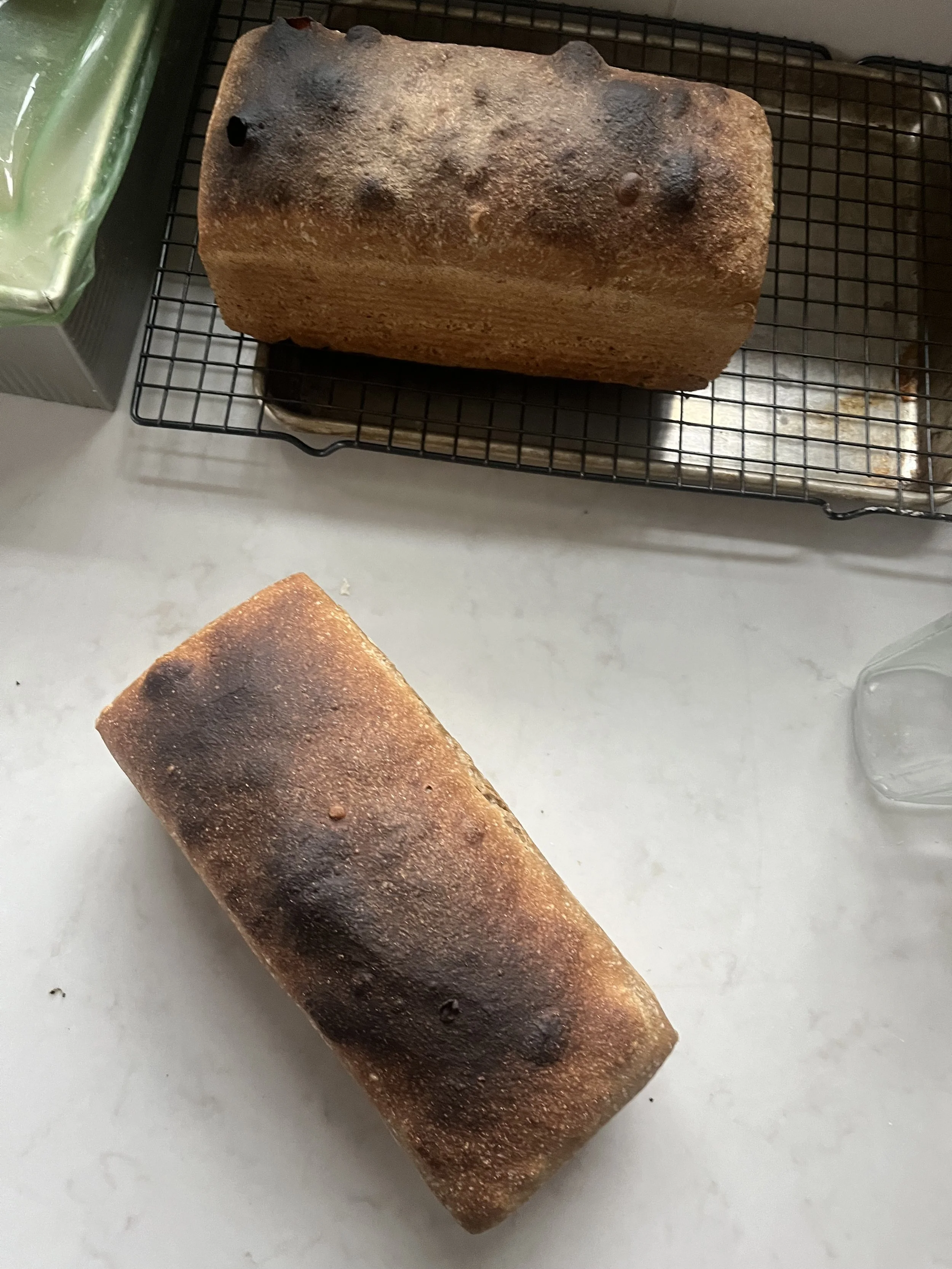
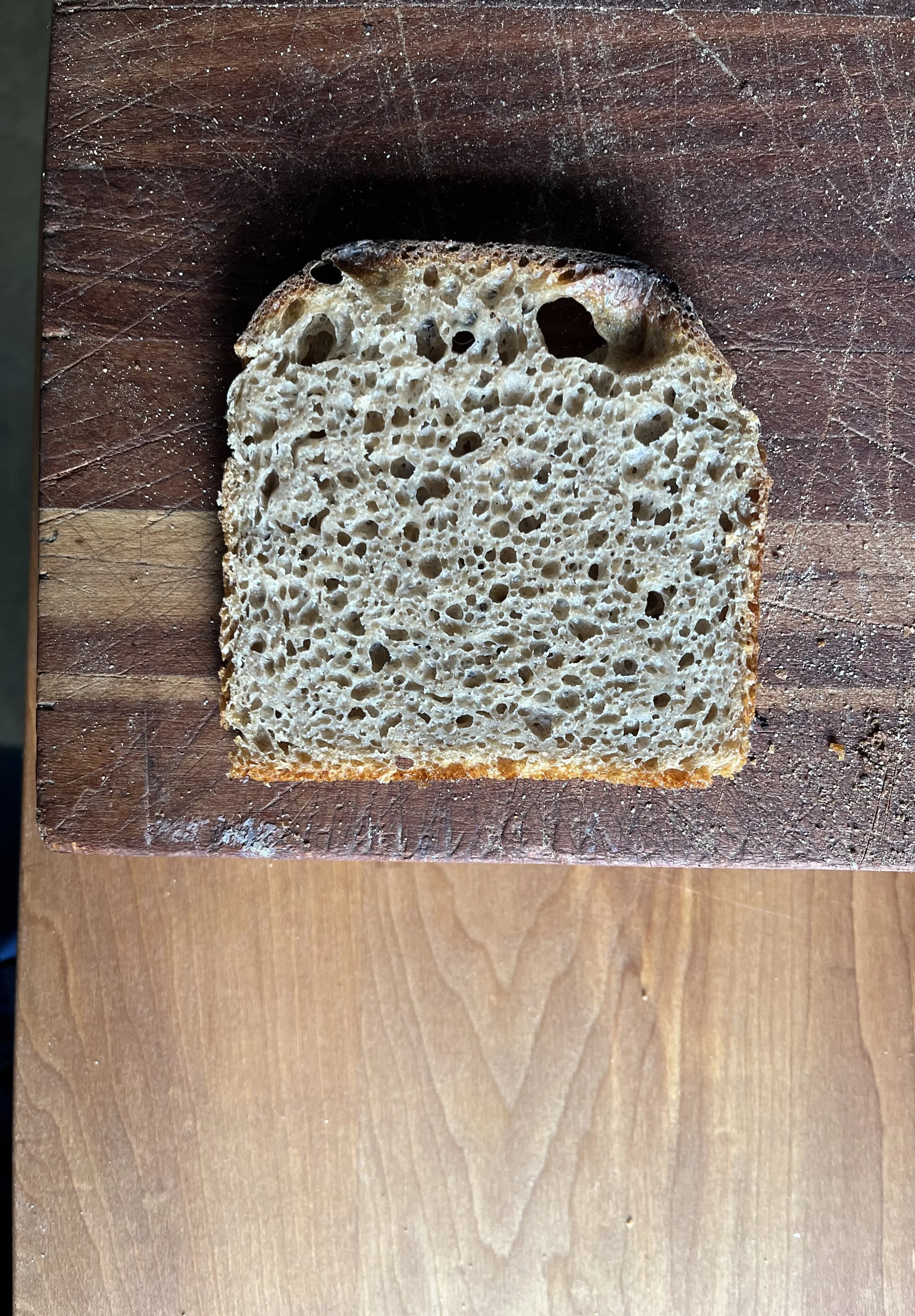
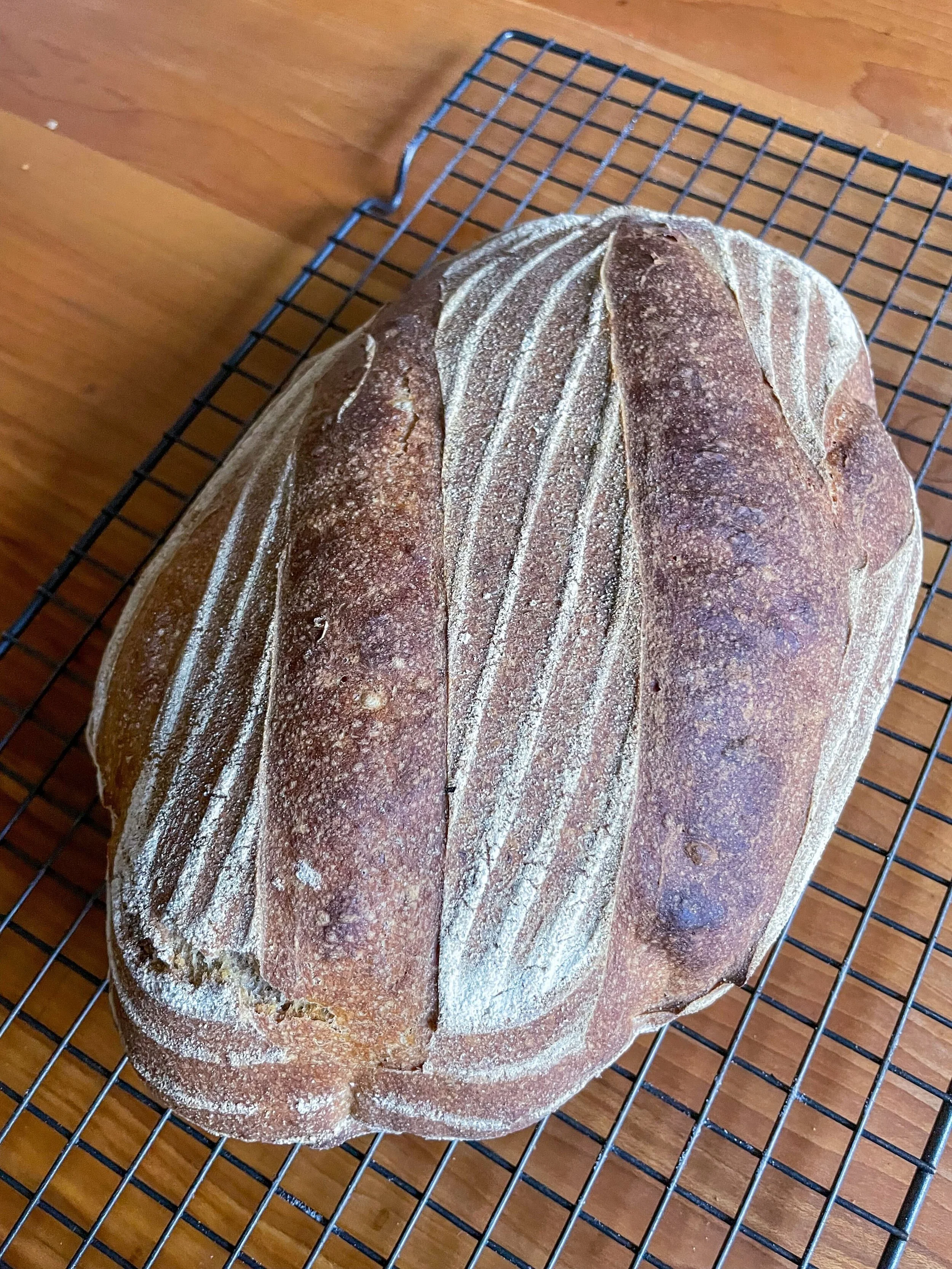
Can also nix the bread pan and opt for Dutch oven method for hearth style loaf.
Here is a simple naturally-leavened loaf using our 85 Bread flour. This recipe yields two-800 gram loaves. I am a baker who prefers to mix her dough by hand. Even when running my Natural Bridge Bakery (1994-2008), I mixed my doughs by hand. If you prefer a mixer, ditch my process but try this formula. This recipe makes a lovely sandwich loaf (or hearth bread!)
LEAVEN
77 grams HIGH EXTRACTION BREAD FLOUR
77 grams WATER
15 grams STARTER
DOUGH
811 grams HIGH EXTRACTION BREAD FLOUR (85B)
689 grams FILTERED WATER
162 grams LEAVEN
18 grams SEA SALT
MAKE THE LEAVEN: Measure water in a pint size container (ideally a clear container so you can see the development). Add starter and stir into the water to fully disperse. Add flour and mix until fully incorporated. Place lid on container and leave for 4-8 or even 10 hours depending on the vigor of your starter and and the temp of your home. (You likely know your starter so time accordingly.)
MAKE THE DOUGH:
FLOUR, WATER, LEAVEN Once leaven has doubled in size, begin to mix your dough. Scale flour into a large bowl. Next scale water into a medium bowl. Add your leaven to the water and using your hand, fully disperse the leaven into the water. Next, pour the leaven/water mixture onto your flour. Keep one hand clean and dry, use that hand to hold onto the edge of the bowl. With the other hand, take a flexible plastic scraper and scoop down underneath the ingredients, then fold them onto themselves. Continue this process while rotating the bowl all the way around so that with each scoop and fold, rotate the bowl. Eventually you may want to ditch the plastic scraper and just using your hand continuing the same motion until your ingredients are fully integrated and have become a homogenous dough. Next, cover the bowl and let the dough rest at room temperature for 45 minutes to an hour.
ADD SALT Scale salt. Sprinkle salt evenly over the dough. To fully incorporate the salt into the dough I like to again, use one hand to grasp the edge of the bowl, and the other hand to fold the dough over itself, rotating bowl with each fold until you have gone all the way around. Next, pour the dough onto your counter and using the heel fo your hand, push the dough away and then fold onto itself again, rotating until you have gone all the way around, forming a ball of dough. Place back in bowl. Cover and let dough rest for 45 mintues.
STRETCH + FOLD Bulk ferment the dough at room temperature, applying a series of stretch + folds every 45 minutes x3. After the 3rd stretch + fold, allow to rest for 1 hour. Note: with each stretch + fold you should begin to see the dough develop in strength and will become.. for lack of a better work here… puffy…. You should notice this by the third stretch + fold, and if you do not, give it one more s+f (perhaps 30 minutes instead of 45 for this one).
PRE-SHAPING + SHAPING: Pour dough out onto your countertop. Divide in half (or scale to 2/ 800g+) and pre shape into rounds and let rest for 15 to 30 minutes, while you prepare your bread pans. My favorite is a small Pullman pan (9” x 4”) of which I grease generously with olive oil. Next, shape your dough using your preferring method. (I lightly flour my work surface and and flip the pre shaped dough onto the floured surface. Lightly pat down the dough then fold the bottom toward the middle, next, fold the sides toward the middle, then roll the dough and drop into the pan, seam side down.) Cover pans with shower cap or silicone wrap or plastic bag and let sit at room temp for one to two hours before placing in the refrigerator.
BAKE The next day—either 12 hours, 24 hours, or up to 48 hours, preheat oven to 450°F. Once dough it fully fermented, doubling in size, place in oven and bake for 45 minutes or when internal temp reads 204°F.