
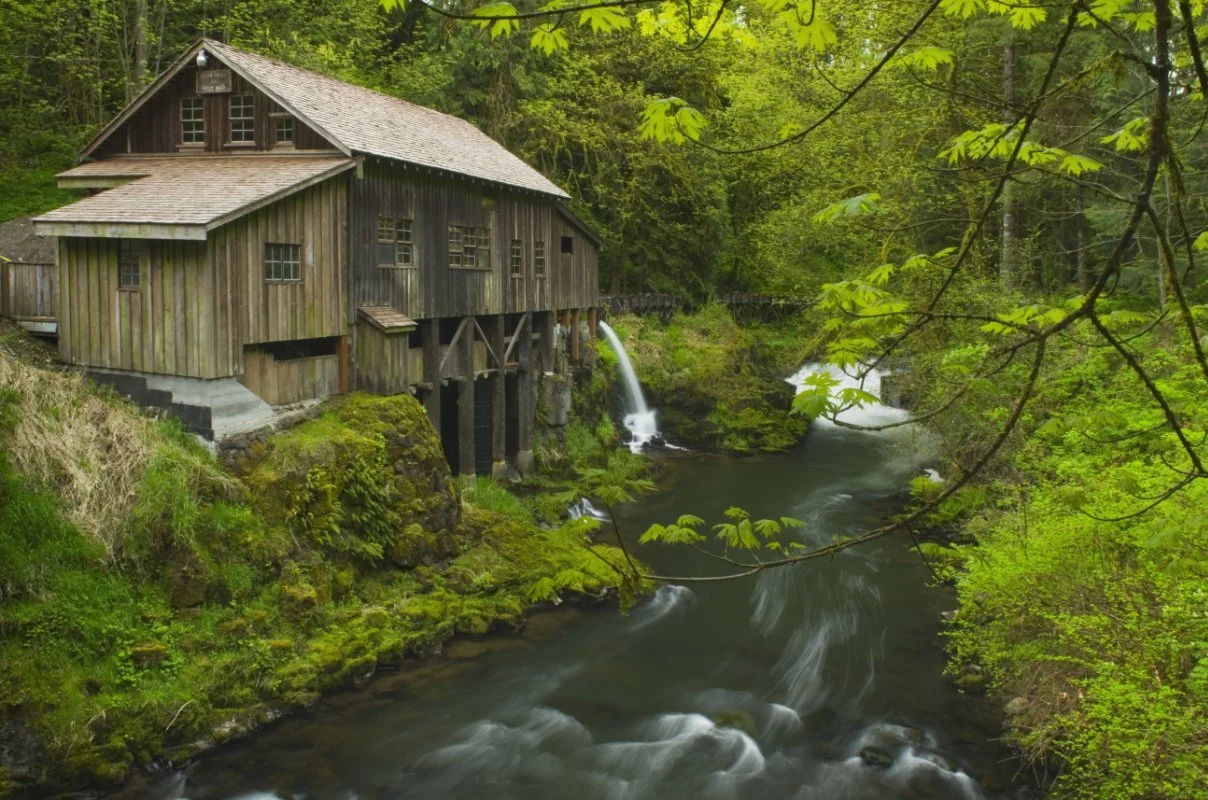
Cedar Creek Grist Mill, built in Skamania County, Washington, in 1876 and now a museum. (Photo credit: Alan Majchrowicz, Getty Images)
11.20.2024
Two hefty, 7-foot-tall machines stand in a corner of the airy, white-walled Carolina Ground warehouse in Hendersonville, North Carolina. One framed in light pine wood, the other in gleaming stainless steel, they project an aura of massive force—especially once they start to move.
These gristmills use a pair of huge cylindrical stones, each about four feet wide, two feet thick, and weighing close a ton apiece, to pulverize wheat and other grains. With a dull roar, like the sound of heavy rain and hail on a metal roof, they gradually crush the kernels between them into a cascade of flavorful flour.
Like the thousands of small processors that once dotted the American landscape, Carolina Ground founder Jennifer Lapidus buys her wheat from nearby growers, grinds it whole at low temperatures to preserve the nutrients in the grain’s flavorful, rich germ, and sells the flour to area bakers seeking a delicious, locally sourced foundation for their products. Although September’s Hurricane Helene disrupted operations temporarily, the mill was up and running within a couple of weeks and could get flour to customers quickly, supporting their businesses in turn. That’s how mills once operated: as mainstays of their own small communities.
“Every town in the U.S. probably has a road that has ‘mill’ in it,” says Michelle Ajamian, who owns Shagbark Seed & Mill in Athens, Ohio (and in fact happens to live on a Mill Creek Road). But the era of the neighborhood mill disappeared long ago.
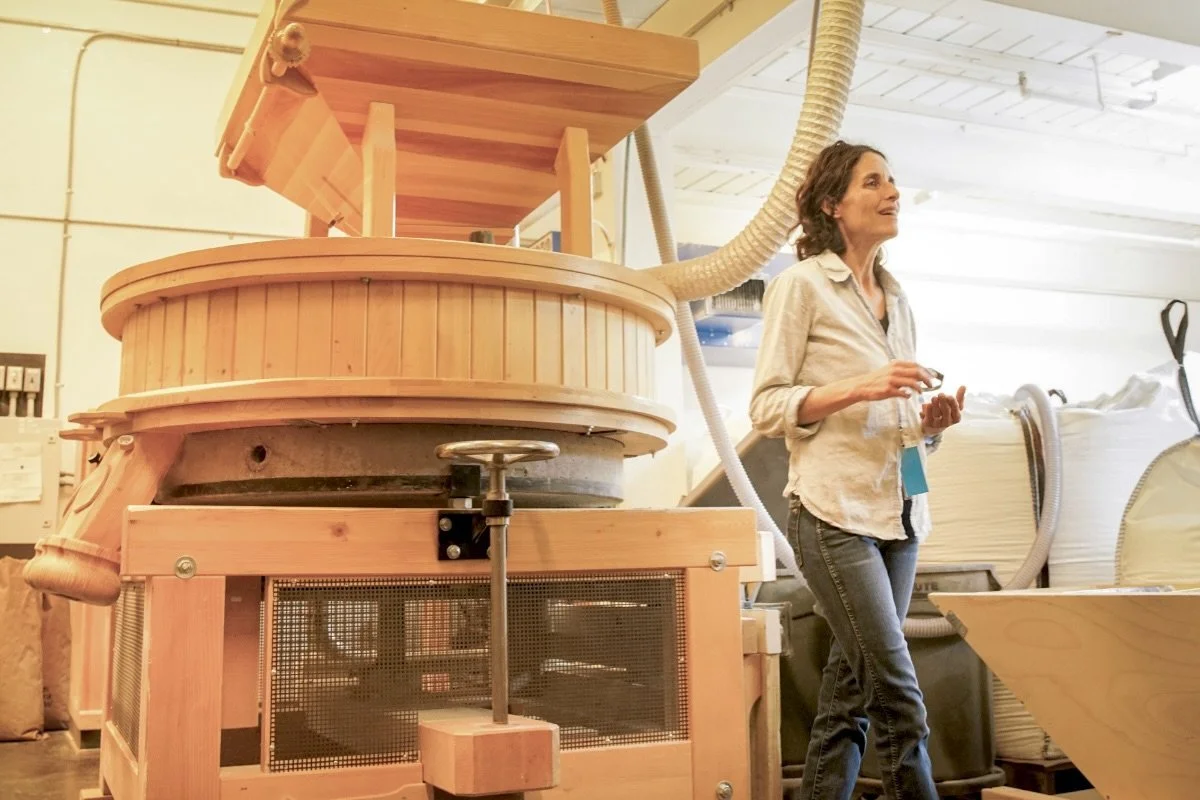
Carolina Ground founder Jennifer Lapidus with her pinewood Osttiroler gristmill. (Photo credit: Rinne Allen)
The Craft Millers Guild is working to change that. Ajamian and others established the guild in 2020 to provide a community for a new generation of millers who draw inspiration from historic practices and try to help restore regional grain economies that have been lost to industrialization. Through networking, education, and advocacy, the group hopes to help small millers get established and grow their share of the market. Their success, says Ajamian, will mean bringing back a grain system that supports local businesses, provides fresher and more nutritious flour, and preserves biodiversity by using a variety of grains.
Continue to full article below.